- Financial Survival Network
- Posts
- 🐤 The Canary Has Left the Gold/Silver Mine
🐤 The Canary Has Left the Gold/Silver Mine
The moment we have all been waiting but hoped would never come...

Kerry Lutz
December 15, 2025
There comes a moment in every long-running system when the fixes stop fixing.
Not suddenly.
Not dramatically.
Just quietly — when more effort produces less effect.
That’s where we are now.
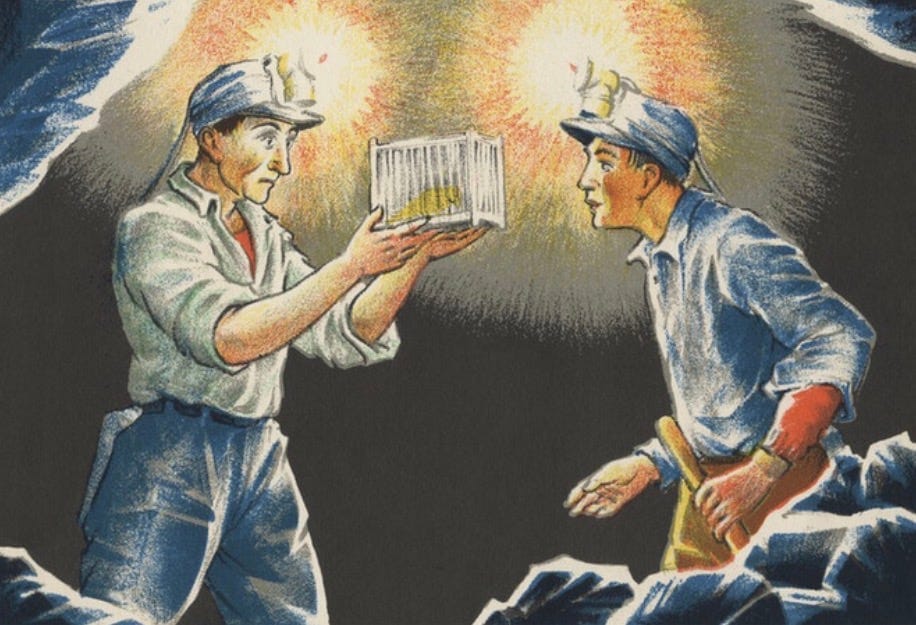
For generations, gold and silver were meant to serve as the canary in the economic coal mine 🪙. They weren’t designed to be speculative assets. They were warning signals — early indicators that monetary policy, debt, and currency discipline were drifting too far from reality.
When gold and silver moved, policymakers noticed.
When they rose, something was wrong.
Over time, that role changed.
🧪 Managing the Canary Instead of Fixing the Mine
Rather than address the environment, we learned how to manage the signal.
Gold and silver were financialized 📄, synthetically expanded, layered with derivatives, and redefined as commodities instead of money.
The goal wasn’t to silence them — it was to smooth them.
📉 When Intervention Turns Counterproductive
Early intervention works. Late intervention backfires.
At first, new money stimulates activity 💵. Later, it distorts it. Eventually, every additional dollar reduces confidence, slows velocity, and discourages productive behavior.
Economists call this negative marginal utility.
🪙 Gold and Silver Aren’t “Breaking Out” — They’re Losing Responsiveness
Attempts to push gold and silver lower no longer produce follow-through. Selling pressure is absorbed, not extended. Prices recover without urgency or panic.
This isn’t excitement. It’s loss of responsiveness ⚙️.
🚪 When the Canary Leaves the Gold/Silver Mine
Gold and silver haven’t failed. Nothing dramatic has ended. But the canary has left the gold/silver mine 🐤.
People who’ve lived through cycles recognize this moment — not with fear, but with clarity.
📚 Further Reading
• *The Armstrong Economic Code* – A clear framework for understanding cycles, confidence, and why systems break when intervention goes too far.